
OvertheCounter
    Twitter LinkedIn
    • Email Newsletters
    • Magazine Subscriptions
    • About Us
    • Advertise
    • Contact Us
    Twitter LinkedIn
    CPD Log-In
    OvertheCounter
    • News
      • Dairy / Beef
      • Sheep
      • Pigs / Poultry
      • Equine
      • Companion
      • Retail
      • Training
    • Magazines
      1. May 2026
      2. March 2026
      3. January 2026
      4. November 2025
      5. September 2025
      6. July 2025
      7. May 2025
      Featured

      Over the Counter – May 2026

      By Simon KingMay 18, 2026
      Recent

      Over the Counter – May 2026

      May 18, 2026

      Over the Counter – March 2026

      March 17, 2026

      Over the Counter – January 2026

      January 12, 2026
    • CPD Training
      • AMTRA CPD Modules
        • Frontline Academy
        • Companion Animal CPD Modules
        • Equine CPD modules
        • Livestock CPD Modules
        • Poultry CPD Modules
        • Are you a Gold Standard SQP?
      • VETPOL CPD Modules
        • Companion Animal CPD Modules
        • Equine CPD Modules
        • Livestock CPD Modules
        • Poultry CPD Modules
      • Earning CPD points with overthecounter.news
      • CPD Log-In
      • Wormstock 2023
    • National SQP Awards
    OvertheCounter
    Equine

    Young horses most at risk from encysted redworm

    Carolyn HendersonBy Carolyn HendersonFebruary 14, 2017No Comments4 Mins Read
    LinkedIn Twitter Facebook Email

    Recent incidences of young, neglected horses being dumped dead or dying have prompted Zoetis to warn of the risks of larval cyathostominosis. This potentially fatal disease is caused by excessive burdens of encysted small redworm, from which neglected and abandoned horses are often found to be suffering.

    Encysted small redworm (ESRW) are the hibernating larval stages of the small redworm that bury themselves in the horse’s gut wall. While every horse is at risk of encysted small redworm and associated diseases such as cyathostominosis, animals less than five years old or those with previously poorly managed burdens are the most susceptible.

    During autumn and winter, when environmental conditions are less favourable for small redworm larvae to develop on the pasture, the proportion of encysted larval stages within the horse’s gut wall gradually increases. Instead of continuing their normal development within cysts in the gut wall, larvae stop developing and enter a hibernating state where they are known as encysted small redworm. In horses where pasture management has been poor and worm control has been inadequate, large encysted burdens can accumulate.

    ESRW larvae typically emerge from their cysts in early spring when environmental conditions improve. Larvae re-emerge into the lumen of the gut where they finish their development into egg laying adults. Mass emergence of ESRW can cause severe damage and inflammation to the gut lining resulting in the disease syndrome ‘larval cyathostomonisis’, Once clinical signs of the disease are evident, there is a 50% mortality rate, despite treatment. Incidence is higher in horses less than five years old and in the spring.

    Horses that develop larval cyathostominosis may have a history of being treated inadequately during the previous grazing season or been kept on over-stocked and highly infected pastures. These circumstances can cause them to accumulate large burdens of encysted larvae.2

    “Typically, horses of around two to five years of age appear to be at the greatest risk,” explains Dr Wendy Talbot, National Equine Veterinary Manager at Zoetis. “We still don’t know exactly why this is the case and both a reduced or increased immune response to the dangerous larval stages of the redworm have been suggested as a cause’.

    Larval cyathostominosis can also occur following treatment with a non-larvicidal wormer, i.e. one that is not effective for the treatment of the larval stages of the small redworm. While such a wormer will kill the more mature stages of ESRW, it will subsequently encourage the larval stages to progress with their emergence, potentially causing cyathostominosis.

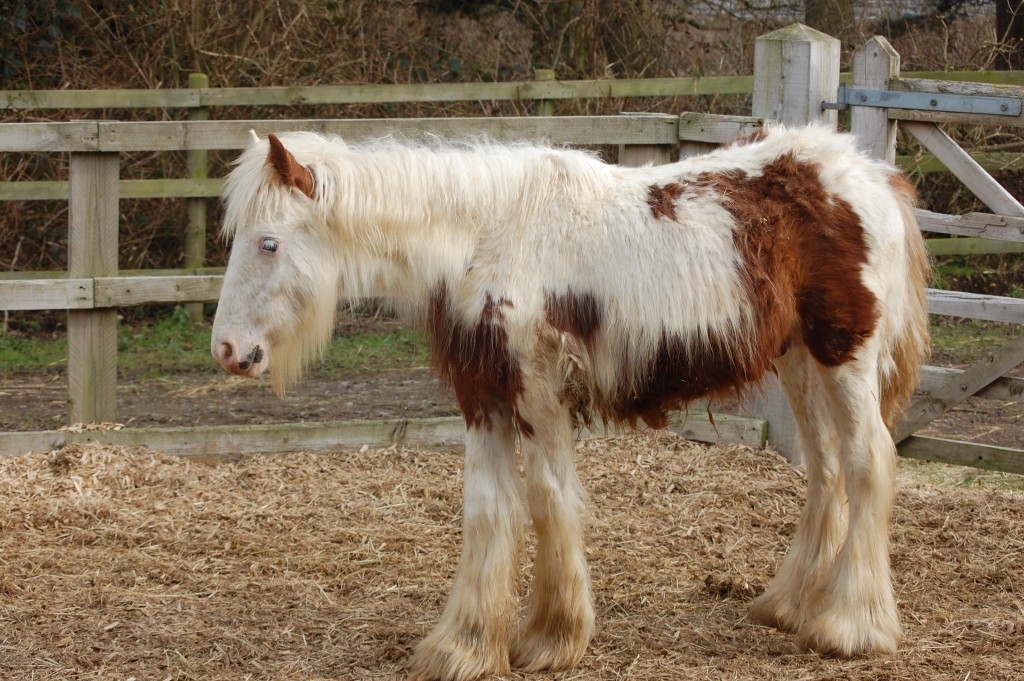
    * The young horse pictured was taken in and rehabilitated by Blue Cross.


    Checklist

      • Encysted small redworm won’t show up in a faecal worm egg count. Horses can harbour several million larvae yet show negative or low FECs.
      • Treat every horse for encysted small redworm once a year. Ideally, treat in the late autumn or early winter, but certainly before spring.
      • Use the right wormer: a single dose of moxidectin or a five-day course of fenbendazole
    • Horses under five years old are at the highest risk.


    • Beware of resistance. There is widespread evidence of resistance in small redworm to fenbendazole, including the five-day dose, so a resistance test is recommended before using it.
    • Keep redworm under control in summer. Organise regular FECs from early March until October. Treating according to the results will help keep redworm under control and reduce the risk of large hidden encysted burdens forming.
    • Use faecal egg count reduction tests during the grazing season. This involves taking a FWEC immediately before and two weeks after worming to assess the level of worm eggs being shed.
    • Be rigorous with pasture management. Daily poo-picking, regular rotation and resting of fields and cross-grazing with sheep or cattle will help keep pasture worm burdens under control.
    • Seek veterinary advice: If you have a vulnerable young horse showing any clinical signs, speak to your vet before using a wormer.


     

    Share. LinkedIn Facebook Twitter Email
    Previous ArticleHoppy Valentine’s Day surprise
    Next Article BVA warning on animal health surveillance
    Carolyn Henderson

    Read Similar Stories

    New film warns of potential resurgence of dangerous large redworm in UK horses

    Vetpol to host four equine CPD webinars

    International welfare champion wins NEF Sir Colin Spedding Award

    Most Read

    Pet owners reveal what matters most when choosing products for their animals

    May 19, 2026

    Over the Counter – May 2026

    May 18, 2026

    Provita unveils strategic sales alliance with Norbrook

    May 18, 2026

    Any animal medicine advertising or promotion should conform to the ‘code of practice’ of the National Office of Animal Health (NOAH).
    For full details contact the publisher or www.noah.co.uk.

    Lewis Business Media Ltd endeavours to make articles and statements as accurate as possible.

    © 2026 Lewis Business Media. All Rights Reserved.
    Lewis Business Media, Suite A, Arun House, Office Village, River Way, Uckfield, TN22 1SL

    Privacy Policy | Cookie Policy | Terms & Conditions

    The OTC "tick" mechanism is the copyright of Lewis Business Media Ltd ©2025

    • Pet Business World
    • Pest

    Type above and press Enter to search. Press Esc to cancel.

    OvertheCounter
    Managing Your Privacy

    To provide the best digital experience, we use cookies to store and/or access device information. Consenting to our use of cookies allows us to process data such as reading behaviour. Not consenting or withdrawing consent, may adversely affect certain features and functions.

    Functional Always active
    The technical storage or access is strictly necessary for the legitimate purpose of enabling the use of a specific service explicitly requested by the subscriber or user, or for the sole purpose of carrying out the transmission of a communication over an electronic communications network.
    Preferences
    The technical storage or access is necessary for the legitimate purpose of storing preferences that are not requested by the subscriber or user.
    Statistics
    The technical storage or access that is used exclusively for statistical purposes. The technical storage or access that is used exclusively for anonymous statistical purposes. Without a subpoena, voluntary compliance on the part of your Internet Service Provider, or additional records from a third party, information stored or retrieved for this purpose alone cannot usually be used to identify you.
    Marketing
    The technical storage or access is required to create user profiles to send advertising, or to track the user on a website or across several websites for similar marketing purposes.
    • Manage options
    • Manage services
    • Manage {vendor_count} vendors
    • Read more about these purposes
    Cookie Preferences
    • {title}
    • {title}
    • {title}