

Livestock farmers are being warned to brace for continued high bedding costs and supply issues, as straw and hay prices are expected to remain elevated throughout 2026 and beyond.
According to AHDB, tight supplies, ongoing weather challenges and rising production costs are continuing to drive the market, with little sign of easing in the near term.
In its latest straw outlook, AHDB senior economist Jess Corsair said: “Wet weather at the start of 2026, tight straw supplies, reduced cropping areas and high contracting costs mean straw prices may stay elevated through 2026. It is likely that higher price levels for straw and hay could remain throughout 2026 and future years.”
Further pressure is expected as cropping areas decline, with spring barley predicted to be down 15% in 2026 and winter barley also seeing a reduction, raising concerns over future availability.
The warning comes after two difficult harvests in 2024 and 2025, which saw wet weather impact both yield and quality. Wheat straw prices have already risen by an average of 20% year on year, with barley straw following a similar trend. At the same time, sawdust markets have tightened, with large volumes being exported for biomass production, leaving many producers struggling to secure sufficient, good quality bedding.
The impact is now being felt on farm, with shortages, inconsistent quality and rising costs pushing producers to consider alternatives.
Liz Russell, of EnviroSystems, said demand for paper-based bedding is rising sharply.
“We’re not just seeing interest, we’re seeing real pressure from farmers who simply can’t get hold of consistent, good-quality bedding,” she said. “When straw availability becomes unpredictable, it’s not just a cost issue; it becomes a herd health and welfare issue very quickly.”
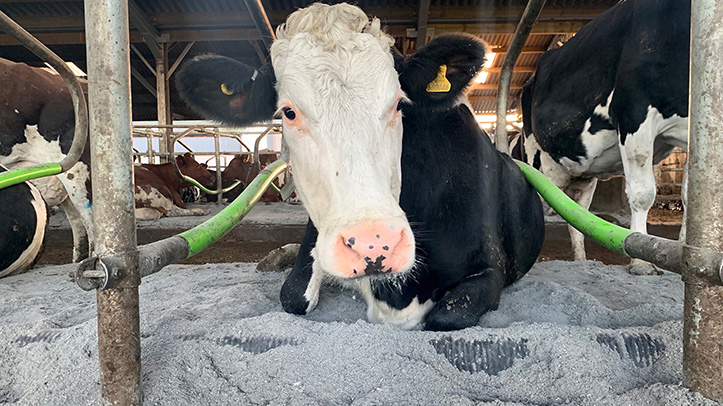
As a result, paper-based bedding, once viewed as a contingency option, is now viewed by many farmers as their main bedding option due to the consistency of the product, its benefits to herd health and welfare, and security of supply.
“We’ve gone from being a crisis solution to something farmers are actively choosing,” added Mrs Russell. “EnviroBed isn’t reliant on the weather, and in a year like this, and with global volatility, that security of supply becomes incredibly important.”
She added that the current situation mirrors the conditions that led her to develop EnviroBed 25 years ago during the 2001 foot-and-mouth outbreak.
“At the time, I was working as a nutritionist with around 30 dairy clients, and during foot-and-mouth they were really struggling to source bedding,” she said. “I ended up investing my own money to develop a solution using paper crumb, which was just being spread on land back then. We were the first company to turn it into a consistent, hygienic bedding product, and 25 years on, we’re seeing exactly why that reliability still matters.”
It was the development of EnviroBed during foot-and-mouth in 2001, and the way it helped farmers, that saw it gain a Queen’s Award for Enterprise and Innovation in 2006.
Poor bedding conditions can have serious implications for livestock systems, increasing the risk of mastitis, lameness and wider welfare issues, ultimately impacting both productivity and profitability.
With demand from GB farmers continuing to rise, EnviroSystems has secured new contracts with paper mills to ensure a consistent supply.
“We may have seen dairy farm numbers decline from 21,000 to 7,000 in the last 25 years EnviroSystems has been in business, but demand has just continued to go up, due to our EnviroBed product working and farmers seeking bedding that is consistent in quality and supply,” she added.
As weather volatility and supply pressures persist, industry figures are urging farmers to plan ahead and consider alternative bedding strategies to protect herd health and business resilience.