

OvertheCounter
    Twitter LinkedIn
    • Email Newsletters
    • Magazine Subscriptions
    • About Us
    • Advertise
    • Contact Us
    Twitter LinkedIn
    CPD Log-In
    OvertheCounter
    • News
      • Dairy / Beef
      • Sheep
      • Pigs / Poultry
      • Equine
      • Companion
      • Retail
      • Training
    • Magazines
      1. May 2026
      2. March 2026
      3. January 2026
      4. November 2025
      5. September 2025
      6. July 2025
      7. May 2025
      Featured

      Over the Counter – May 2026

      By Simon KingMay 18, 2026
      Recent

      Over the Counter – May 2026

      May 18, 2026

      Over the Counter – March 2026

      March 17, 2026

      Over the Counter – January 2026

      January 12, 2026
    • CPD Training
      • AMTRA CPD Modules
        • Frontline Academy
        • Companion Animal CPD Modules
        • Equine CPD modules
        • Livestock CPD Modules
        • Poultry CPD Modules
        • Are you a Gold Standard SQP?
      • VETPOL CPD Modules
        • Companion Animal CPD Modules
        • Equine CPD Modules
        • Livestock CPD Modules
        • Poultry CPD Modules
      • Earning CPD points with overthecounter.news
      • CPD Log-In
      • Wormstock 2023
    • National SQP Awards
    OvertheCounter
    News

    Sheep scab management: a community-based regional approach in England

    mmBy Simon KingMay 15, 2024No Comments3 Mins Read
    LinkedIn Twitter Facebook Email

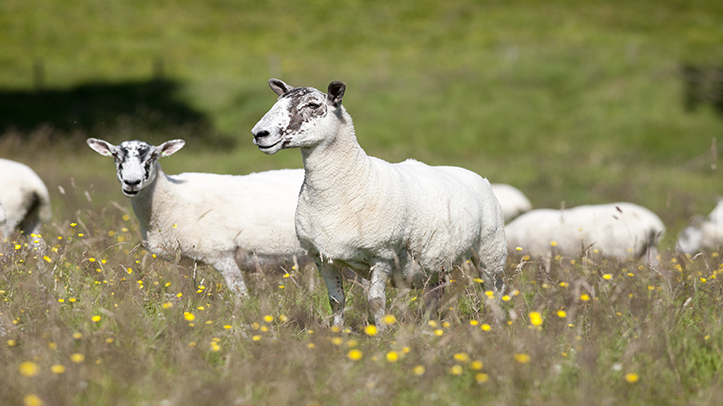
    In response to the growing problem of sheep scab, a regional programme has successfully implemented a community-based approach to reduce the prevalence of the disease in three hotspots in England.

    Sheep scab, caused by infestation with the ectoparasitic mite, Psoroptes ovis, leads to clinical disease, economic losses and severely compromised animal welfare. It is estimated that there are around 10,000 outbreaks of sheep scab in the UK each year, with many flocks suffering from persistent infestations in regions where the disease is common.

    Sheep scab costs the UK sheep industry £80-200 million annually. In recent years, sheep scab mites in the UK have developed resistance to the injectable endectocides (macrocyclic lactones) used for their control. As such, it is crucial that the sheep industry takes decisive action to control this disease.

    Recently published in Veterinary Record, the “For Flock’s Sake” programme involved 300 farmers working together in clusters in three high-risk scab areas: the North (Cumbria, Lancashire, North Yorkshire, and Northumberland), the Midlands (Shropshire and Herefordshire) and the Southwest (Cornwall and Devon).

    Within each hotspot, the programme focussed on ‘clusters’ of farms that share common boundaries or used the same common grazing, where the aim was to foster cooperation in the control of scab.

    Participating farms provided a detailed history of their previous experience of scab outbreaks and agreed to sheep scab blood testing of a single management group of 12 animals from their flocks during the summer of 2021 and then again in 2022. The use of the blood test on all farms was pivotal, allowing the identification of farms with subclinical sheep scab.

    Over the two years of the programme, there was a significant reduction in the incidence of sheep scab overall. The results show that this type of targeted approach to disease control can be effective if all stakeholders are involved from the outset.

    A key aspect of the programme was that participating farmers agreed to share the results of their flock-level blood tests with other farmers and coordinate treatments within their cluster. The work shows that coordinated efforts can help prevent infestations from persisting and spreading, and sharing test results and responsibility among farmers can help reduce the stigma associated with sheep scab.

    Regional coordinators from the National Sheep Association (NSA), ADAS, and the Farmer Network played pivotal roles in the success of the programme, by engaging with local farmers and ensuring smooth communication between participants, veterinarians, and mobile dippers for scab treatment.

    The authors conclude that the programme provides an effective model that, with some modifications, could be extended nationally to achieve long-lasting, sustainable control of sheep scab.

    Share. LinkedIn Facebook Twitter Email
    Previous ArticleSCOPS: Now is the time to start faecal egg counts (FECs) on February and March-born lambs
    Next Article Blowfly risk rises across UK
    mm
    Simon King

    Editor - Over The Counter. Simon has more than 20 years’ experience in B2B publishing. When not slumped over his PC, Simon is a keen follower of sport, supporting Manchester United, and is at his absolute happiest watching most sport in glorious UHD, with something cold to drink by his side.

    Read Similar Stories

    Farms hold key to break rodenticide resistance spread

    New calculator helps optimise pig and broiler feed strategies

    New environmental index launched to cut UK sheep flock carbon footprint

    Most Read

    Farms hold key to break rodenticide resistance spread

    June 3, 2026

    New calculator helps optimise pig and broiler feed strategies

    June 2, 2026

    New environmental index launched to cut UK sheep flock carbon footprint

    June 1, 2026

    Any animal medicine advertising or promotion should conform to the ‘code of practice’ of the National Office of Animal Health (NOAH).
    For full details contact the publisher or www.noah.co.uk.

    Lewis Business Media Ltd endeavours to make articles and statements as accurate as possible.

    © 2026 Lewis Business Media. All Rights Reserved.
    Lewis Business Media, Suite A, Arun House, Office Village, River Way, Uckfield, TN22 1SL

    Privacy Policy | Cookie Policy | Terms & Conditions

    The OTC "tick" mechanism is the copyright of Lewis Business Media Ltd ©2025

    • Pet Business World
    • Pest

    Type above and press Enter to search. Press Esc to cancel.

    OvertheCounter
    Managing Your Privacy

    To provide the best digital experience, we use cookies to store and/or access device information. Consenting to our use of cookies allows us to process data such as reading behaviour. Not consenting or withdrawing consent, may adversely affect certain features and functions.

    Functional Always active
    The technical storage or access is strictly necessary for the legitimate purpose of enabling the use of a specific service explicitly requested by the subscriber or user, or for the sole purpose of carrying out the transmission of a communication over an electronic communications network.
    Preferences
    The technical storage or access is necessary for the legitimate purpose of storing preferences that are not requested by the subscriber or user.
    Statistics
    The technical storage or access that is used exclusively for statistical purposes. The technical storage or access that is used exclusively for anonymous statistical purposes. Without a subpoena, voluntary compliance on the part of your Internet Service Provider, or additional records from a third party, information stored or retrieved for this purpose alone cannot usually be used to identify you.
    Marketing
    The technical storage or access is required to create user profiles to send advertising, or to track the user on a website or across several websites for similar marketing purposes.
    • Manage options
    • Manage services
    • Manage {vendor_count} vendors
    • Read more about these purposes
    Cookie Preferences
    • {title}
    • {title}
    • {title}