

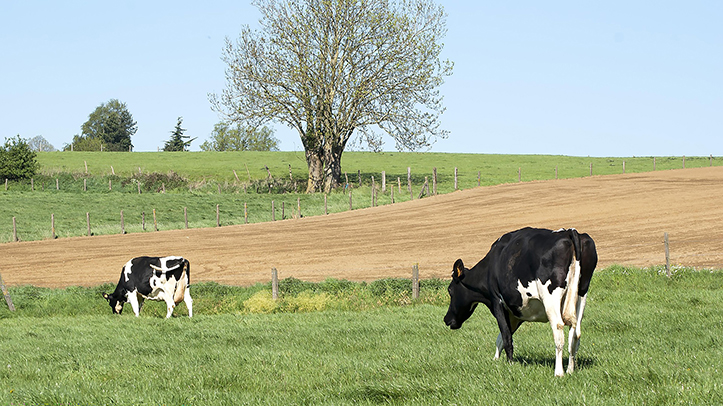
Animal health experts are warning that this summer’s high temperatures could have long-lasting consequences for autumn-born calves, with heat stress in pregnant cows linked to weaker immunity, poorer growth rates and increased disease risk.
Nettex’s technical livestock manager, Nia Williams, says many farmers may not immediately connect current weather conditions with calf performance months later, but the effects of heat stress during gestation can be significant.
“Cows calving this autumn are at greater risk of producing calves with impaired immunity, which can increase susceptibility to diseases such as scours during the first weeks of life,” said Ms Williams.
Heat stress can disrupt a cow’s normal production cycle by reducing feed intake, altering metabolic function and suppressing immunity, while also affecting mammary gland development during the dry period. This can ultimately impact milk production in the following lactation and calf performance after birth.
“Calves born to heat-stressed cows are often lighter at birth and can show reduced growth rates both before and after weaning,” explained Ms Williams. “That makes colostrum management absolutely critical.”
She advises farmers to prioritise rapid colostrum intake after birth and monitor passive transfer levels during the first week of life.
“A blood test between 1-7 days of age can be a useful tool to assess how effectively antibodies from colostrum have been absorbed into the calf’s bloodstream,” she said. “This allows farmers to identify calves at greater risk of health challenges, as well as providing a measure for overall colostrum management on the farm.”
Calves struggling to suckle or showing signs of low energy in the first few days may also benefit from additional nutritional support.
“Energy-boosting supplements, such as Calf Kickstart, can be given alongside colostrum to help encourage calves to feed and support early vitality,” said Ms Williams.
She added that electrolytes, such as Hydra Power, can also play an important role in supporting calves recovering from scours, which may be caused by pathogens including Cryptosporidium, E. coli, Salmonella and Rotavirus.
The impact of heat stress is not limited to calves. Ms Williams said freshly calved cows can also struggle with reduced appetite, dehydration and electrolyte loss following calving – challenges that can be intensified during hot weather.
“Water intake often declines before and during calving, increasing the risk of dehydration,” she explained.
“During calving, cows can lose close to 60 litres of water through blood and uterine fluids, along with significant electrolyte losses.”
Although cows typically drink soon after calving, Ms Williams warned that water alone is not enough to restore electrolyte balance and normal cellular function.
“Supporting cows immediately after calving with energy, calcium, vitamins and electrolytes, using products such as Fresh Calver, can help aid recovery, encourage intakes and support overall health and milk production during this critical period,” she said.