

Carolyn Hogan BVetMed MRCVS, ruminant technical consultant at Elanco Animal Health UK, says the summer grazing season is when sheep farmers’ focus is on achieving optimum lamb growth rates to ensure efficient finishing.
The path to hitting target weights is rarely a straightforward one, with gastro-intestinal nematodes (GIN) being a primary cause of reduced growth rates. As prescribers, SQPs play a key role in guiding responsible and effective worm control.
The weather factor
Weather plays a key role in both the timing and level of parasite risk.
Last year, the prolonged hot, dry summer conditions across much of England suppressed the mid-season worm challenge. When the rain returned in September it triggered a surge in infective larvae release from dung pats onto pasture resulting in a later than normal challenge.
In wetter western and upland regions more regular rainfall meant parasite challenge was more consistent throughout the grazing season. Changes in rainfall and temperature patterns this year are likely to alter both the timing and level of parasite risk compared with last year.
In a recent Elanco survey of 360 UK sheep farmers, 78% reported that changing weather patterns have altered worm pressure on their farms. This variability makes routine or ‘calendar-based’ treatments less reliable, increasing the risk of treatments being unnecessary or poorly timed.
The hidden cost: growth rates vs. clinical signs
Using obvious clinical signs, such as scouring and weight loss, to identify a worm burden can be unreliable, as production losses often occur before these signs become apparent. In one study, lambs infected with the stomach worm Teladorsagia circumcincta showed a reduction in growth rates of nearly 50%, despite no obvious clinical signs.
Worm burdens reduce growth through multiple mechanisms:
- Gut damage – diverting energy away from growth towards tissue repair
- Nutrient loss and impaired digestion/absorption
- Reduced efficiency of conversion of metabolisable energy (ME) into growth
A lamb can only grow when its daily intake exceeds its maintenance requirement. Worms increase energy demands and reduce nutrient availability, meaning less energy is available for growth. This results in more days to finish, increased forage use, and reduced grass utilisation efficiency.
At first glance, this might suggest that regular worming throughout the summer is the safest approach. However, routine treatments increase the risk of anthelmintic resistance (AR), which is widespread on UK sheep farms. One study identified resistance to at least one wormer group on 98% of farms.
Parasite control has evolved significantly in recent years, with greater emphasis on striking the right balance between reducing reliance on anthelmintics to minimise AR, while using them when necessary to minimise production losses. Achieving this balance of using ‘as little as possible, as much as necessary’ requires skilled stockmanship and regular monitoring of lamb performance.
The monitoring toolbox: FECs, DLWG and drench checks
Key tools to support responsible worm control include faecal egg counts (FECs), daily liveweight gain (DLWG), and drench checks.
FECs
Provide an indication of worm burden. Testing should ideally be carried out every 3–4 weeks during the grazing season, although frequency may vary depending on the weather. Results should be interpreted alongside lamb health and performance. Regular testing, rather than one-off samples, helps build a more complete picture.
DLWG
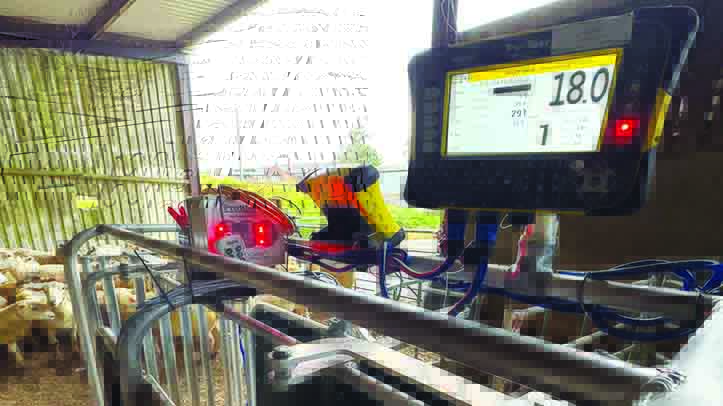
A drop in growth rates, or lower than expected DLWG in otherwise healthy lambs, can be an early indicator of a rising worm burden. Monitoring weights from around 8 weeks of age and then every 2-4 weeks is ideal, although periodic weighing can still provide valuable insights. EID and automated systems can help simplify DLWG monitoring.
Drench checks
Compare FECs before and after treatment to assess anthelmintic efficacy. While thresholds vary by test method, a reduction of less than 90% generally indicates reduced wormer efficacy.
Combining FEC, DLWG and drench check data supports more informed decisions on whether, when, how and which animals to treat.
Grazing management, refugia, and targeted treatment
Most infective larvae are concentrated in the lower sward, avoiding tight grazing and maintaining a sward height above 4-5 cm can reduce larval intake. Herbal leys, such as those containing chicory and plantain, may also help. Their more open sward structure can limit larval migration up the plant compared to dense grass swards such as ryegrass, and there is evidence that some species contain bioactive compounds that may contribute to reduced parasite burdens.
Maintaining refugia, the population of worms not exposed to treatment, is essential to slow development of AR. This relies on preserving susceptible worms to dilute resistant populations, achieved through:
Managing the pasture
Avoiding practices such as ‘dose and move’ onto clean pasture, which can result in clean pastures being seeded predominantly with resistant worms.
Managing which animals to treat
Targeted selective treatment (TST) or targeted treatment (TT) minimises the number of animals treated by not treating lambs with lower worm burdens or those with the ability to maintain growth despite infection (resilience). The proportion left untreated and selection criteria will vary by farm and requires a farm-specific approach.
The late season break dose
In late summer and early autumn, as pasture contamination increases, a mid to late season ‘break dose’ using one of the newer actives, Group 4-AD (monepantel; Zolvix) or Group 5-SI, can be used to remove residual worm burdens, including those surviving earlier Group 1 (White), 2 (Yellow) or 3 (Clear) treatments. This targeted treatment serves two main purposes:
Lamb growth
Removal of residual worm burdens allows lambs to achieve their true growth potential and make the most of late-season grazing
Resistance management
Reduces the shedding of eggs from worms surviving earlier treatments onto pasture, helping to slow the development of resistance to the three older anthelmintic groups
The timing of the break dose will vary between farms and should be guided by local conditions and previous treatment history.
Summary
Grass is too valuable a resource to be lost to worms. Monitoring FECs, tracking lamb growth, and using treatments strategically, including a well-timed mid to late season break dose where appropriate, helps protect both lamb performance and anthelmintic longevity.