

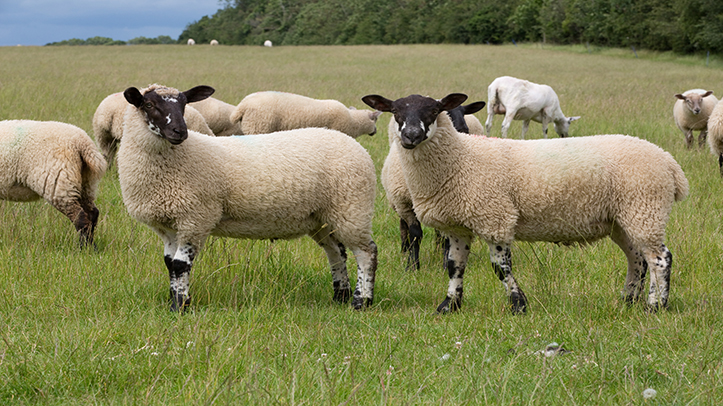
Rainfall following a prolonged period of hot, dry weather could trigger a rapid rise in worm challenge on sheep farms this summer, putting lamb growth at risk before any visible signs appear.
The hidden impact can be substantial. A moderate worm burden can reduce growth rates by up to 50% before clinical signs are seen, delaying finishing and increasing pressure on available grass and feed.
“The two- to three-week period following rainfall can be very high risk so is an important time to re-evaluate the level of worm challenge,” Mr Colston said.
“That might mean increasing the frequency of faecal egg count (FEC) monitoring, looking more closely at daily liveweight gain or, where suitable grazing is available, moving lambs onto lower-risk pasture that has not been grazed by lambs already this season.”
FEC testing is becoming a routine part of worm control on many farms. Testing approximately every three weeks is recommended, but Mr Colston noted that this may not be realistic for everyone.
“For farmers managing several groups, it may be more feasible to choose a regular day of the week, such as ‘Worm Count Wednesdays’, and test a different mob each week,” he said.
“This creates a manageable routine, while allowing the sampling frequency to be adjusted if a previous result, changing weather conditions or slowing growth suggests the risk is increasing.”
Monitoring daily liveweight gain (DLWG) can provide an additional early warning, helping to identify lambs whose performance is being affected before obvious clinical signs develop.
“You can compare current DLWG with averages from previous years and aim to treat lambs in the bottom 25%,” said Mr Colston.
Where treatment is required, a post-treatment FEC can help confirm that the wormer has worked effectively. Samples should be taken seven days after treatment with a yellow, 2-LV drench and around 14 days after treatment with other wormer groups.
“Knowing which treatments remain effective on your farm is just as important as identifying when treatment is needed,” said Mr Colston.
“It’s a good idea to use FECs and treatment checks to build that picture, then work with your prescriber to select an appropriate treatment for the worms present.”
These treatment checks can also help inform where different wormer groups fit within the wider control plan. Zolvix, a group 4 wormer, should be used as a quarantine treatment for incoming and returning stock, and as a mid-to-late-season break dose for lambs after weaning when a worming treatment is required.
“Zolvix does not have to be saved until the final treatment of the season, but the greatest benefit comes from using it at an appropriate point in the latter part of the grazing season,” Mr Colston added.