

OvertheCounter
    Twitter LinkedIn
    • Email Newsletters
    • Magazine Subscriptions
    • About Us
    • Advertise
    • Contact Us
    Twitter LinkedIn
    CPD Log-In
    OvertheCounter
    • News
      • Dairy / Beef
      • Sheep
      • Pigs / Poultry
      • Equine
      • Companion
      • Retail
      • Training
    • Magazines
      1. July 2026
      2. May 2026
      3. March 2026
      4. January 2026
      5. November 2025
      6. September 2025
      7. July 2025
      Featured

      Over the Counter – July 2026

      By Simon KingJuly 31, 2026
      Recent

      Over the Counter – July 2026

      July 31, 2026

      Over the Counter – May 2026

      May 18, 2026

      Over the Counter – March 2026

      March 17, 2026
    • CPD Training
      • AMTRA CPD Modules
        • Frontline Academy
        • Companion Animal CPD Modules
        • Equine CPD modules
        • Livestock CPD Modules
        • Poultry CPD Modules
        • Are you a Gold Standard SQP?
      • VETPOL CPD Modules
        • Companion Animal CPD Modules
        • Equine CPD Modules
        • Livestock CPD Modules
        • Poultry CPD Modules
      • Earning CPD points with overthecounter.news
      • CPD Log-In
      • Wormstock 2023
    • National SQP Awards
    OvertheCounter
    News

    Catch worms in the ‘amber zone’ before lamb performance slips

    mmBy Simon KingSeptember 3, 2026No Comments3 Mins Read
    LinkedIn Twitter Facebook Email
    Animals may look perfectly healthy even when worm burdens are already affecting growth

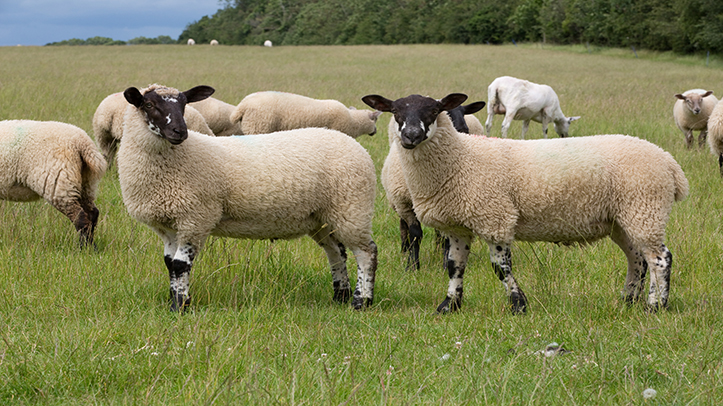
    Rainfall following a prolonged period of hot, dry weather could trigger a rapid rise in worm challenge on sheep farms this summer, putting lamb growth at risk before any visible signs appear.

    “The difficulty is that lambs can quickly enter the ‘amber zone’, where worm burdens are already affecting growth, but the animals still look perfectly healthy,” explained Elanco ruminant technical consultant, Matt Colston.

    “There may be no obvious sign that anything is wrong, other than growth slowing. By the time there are any visible signs that all is not well some lambs in the group could be losing weight (they have moved into the high-risk red zone).”

    The hidden impact can be substantial. A moderate worm burden can reduce growth rates by up to 50% before clinical signs are seen, delaying finishing and increasing pressure on available grass and feed.

    “The two- to three-week period following rainfall can be very high risk so is an important time to re-evaluate the level of worm challenge,” Mr Colston said.

    “That might mean increasing the frequency of faecal egg count (FEC) monitoring, looking more closely at daily liveweight gain or, where suitable grazing is available, moving lambs onto lower-risk pasture that has not been grazed by lambs already this season.”

    FEC testing is becoming a routine part of worm control on many farms. Testing approximately every three weeks is recommended, but Mr Colston noted that this may not be realistic for everyone.

    “For farmers managing several groups, it may be more feasible to choose a regular day of the week, such as ‘Worm Count Wednesdays’, and test a different mob each week,” he said.

    “This creates a manageable routine, while allowing the sampling frequency to be adjusted if a previous result, changing weather conditions or slowing growth suggests the risk is increasing.”

    Monitoring daily liveweight gain (DLWG) can provide an additional early warning, helping to identify lambs whose performance is being affected before obvious clinical signs develop.

    “You can compare current DLWG with averages from previous years and aim to treat lambs in the bottom 25%,” said Mr Colston.

    “The gold standard approach is to use an algorithm to predict the minimum DLWG for each individual and identify those lambs that are falling short.”

    Where treatment is required, a post-treatment FEC can help confirm that the wormer has worked effectively. Samples should be taken seven days after treatment with a yellow, 2-LV drench and around 14 days after treatment with other wormer groups.

    “Knowing which treatments remain effective on your farm is just as important as identifying when treatment is needed,” said Mr Colston.

    “It’s a good idea to use FECs and treatment checks to build that picture, then work with your prescriber to select an appropriate treatment for the worms present.”

    These treatment checks can also help inform where different wormer groups fit within the wider control plan. Zolvix, a group 4 wormer, should be used as a quarantine treatment for incoming and returning stock, and as a mid-to-late-season break dose for lambs after weaning when a worming treatment is required.

    “Zolvix does not have to be saved until the final treatment of the season, but the greatest benefit comes from using it at an appropriate point in the latter part of the grazing season,” Mr Colston added.

     

    Share. LinkedIn Facebook Twitter Email
    Previous ArticleFlexibility is key for dairy nutrition
    mm
    Simon King

    Editor - Over The Counter. Simon has more than 20 years’ experience in B2B publishing. When not slumped over his PC, Simon is a keen follower of sport, supporting Manchester United, and is at his absolute happiest watching most sport in glorious UHD, with something cold to drink by his side.

    Read Similar Stories

    Flexibility is key for dairy nutrition

    Is fluid therapy a gamechanger to herd health?

    NSA launches official WhatsApp channel

    Most Read

    Catch worms in the ‘amber zone’ before lamb performance slips

    September 3, 2026

    Flexibility is key for dairy nutrition

    September 2, 2026

    Is fluid therapy a gamechanger to herd health?

    September 1, 2026

    Any animal medicine advertising or promotion should conform to the ‘code of practice’ of the National Office of Animal Health (NOAH).
    For full details contact the publisher or www.noah.co.uk.

    Lewis Business Media Ltd endeavours to make articles and statements as accurate as possible.

    © 2026 Lewis Business Media. All Rights Reserved.
    Lewis Business Media, Suite A, Arun House, Office Village, River Way, Uckfield, TN22 1SL

    Privacy Policy | Cookie Policy | Terms & Conditions

    The OTC "tick" mechanism is the copyright of Lewis Business Media Ltd ©2025

    • Pet Business World
    • Pest

    Type above and press Enter to search. Press Esc to cancel.

    OvertheCounter
    Managing Your Privacy

    To provide the best digital experience, we use cookies to store and/or access device information. Consenting to our use of cookies allows us to process data such as reading behaviour. Not consenting or withdrawing consent, may adversely affect certain features and functions.

    Functional Always active
    The technical storage or access is strictly necessary for the legitimate purpose of enabling the use of a specific service explicitly requested by the subscriber or user, or for the sole purpose of carrying out the transmission of a communication over an electronic communications network.
    Preferences
    The technical storage or access is necessary for the legitimate purpose of storing preferences that are not requested by the subscriber or user.
    Statistics
    The technical storage or access that is used exclusively for statistical purposes. The technical storage or access that is used exclusively for anonymous statistical purposes. Without a subpoena, voluntary compliance on the part of your Internet Service Provider, or additional records from a third party, information stored or retrieved for this purpose alone cannot usually be used to identify you.
    Marketing
    The technical storage or access is required to create user profiles to send advertising, or to track the user on a website or across several websites for similar marketing purposes.
    • Manage options
    • Manage services
    • Manage {vendor_count} vendors
    • Read more about these purposes
    Cookie Preferences
    • {title}
    • {title}
    • {title}