

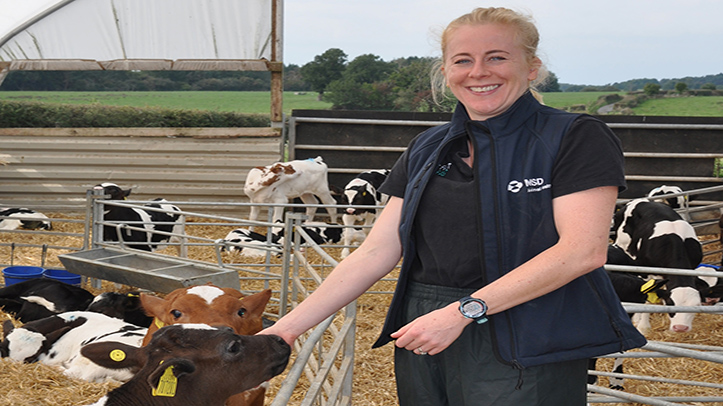
A new national survey has been launched to assess how colostrum is managed on UK beef and dairy farms and identify opportunities for improvement, following recent data highlighting gaps in passive transfer.
Run by Red Stag Media in conjunction with MSD Animal Health, the colostrum survey aims to build a clearer picture of on-farm practices, identify areas for improvement, and highlight ways to optimise calf health and welfare. Five farmers who complete the survey will be randomly selected to each receive a £100 voucher.
The previous colostrum survey, carried out in 2023, revealed missed opportunities for monitoring key parameters such as calf serum total protein and colostrum IgG concentration. It also showed that some farms were not optimally managing colostrum storage temperatures or harvesting colostrum promptly after calving, small adjustments that can deliver significant health benefits, said Dr Kat Baxter-Smith, veterinary adviser at MSD Animal Health.
“Colostrum management remains one of the most important, but often most variable, aspects of calf rearing on UK beef and dairy farms,” she explained. “We know that getting those first feeds right has a lifelong impact on health, growth and performance.
“It’s also increasingly important for calf rearers and finishers, as colostrum management on the dairy farm can influence how calves go on to perform on other units.”
Evidence suggests that a high proportion of calves on some farms are still failing to achieve adequate passive transfer, even where colostrum quality appears good.
A recent case report published in Vet Record highlighted the scale of the challenge. The study, based on a seasonal-calving dairy herd in Northern Ireland, found that more than three-quarters of calves tested had inadequate passive transfer, despite colostrum testing at the recommended 22% Brix or above. All calves later developed scours.
Authored by Dr Ryan Davies of Veterinary Technical Consulting Ltd and Dr Katie Denholm of the University of Glasgow, the paper emphasised the importance of testing calves for passive transfer using blood samples at 24 hours to seven days of age, rather than relying solely on colostrum quality testing.
Dr Baxter-Smith added: “Even where colostrum quality looks good on a Brix refractometer, that doesn’t always mean calves are successfully absorbing enough antibodies. Without monitoring passive transfer through blood sampling, it’s easy to miss what’s really happening.
“Through this survey, we hope to identify weak points in colostrum management, which can then be addressed through practical guidance and support. Small adjustments, such as harvesting colostrum sooner after calving, storing it correctly, improving hygiene, or reviewing feeding protocols can make a significant difference to calf immunity.”
“By completing this survey, farmers are helping us build a clearer national picture of colostrum management,” she adds. “That insight will allow vets and advisers to provide more targeted, practical guidance that ultimately improves calf health and farm profitability.”
MSD Animal Health is encouraging all UK beef and dairy farmers and calf rearers to complete the survey and play their part in strengthening calf immunity. Farmers can opt to be entered into the £500 prize draw upon completion. The survey can be completed by clicking here.