

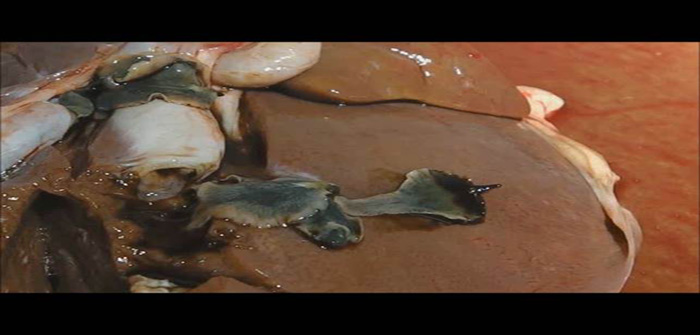
SCOPS and COWS experts recently reviewed laboratory test results, post mortems and feedback from farms, and while losses due to liver fluke continue to be low this season, they warn there is still time for a ‘sting in the tail’.
“Even though many parts of the UK have had a recent cold snap, there could still be active infection on flukey areas which could quickly ramp up if we have a mild spell, “ said Dr Philip Skuce of Moredun.
“Farmers should continue testing and monitoring livestock and remember that a treatment given in the autumn or early winter offers no protection against further infection. There is no such thing as an insurance policy.”
Ben Strugnell of Farm Post Mortems echoes this.
“I have seen very little evidence of liver fluke in post mortems so far this winter, but there is still plenty of time for the challenge to build and pose a threat,” Mr Strugnell said.
“Investigating deaths in livestock is key because we will always check for evidence of liver fluke, so never waste a dead sheep.”
Heather Stevenson (SAC) and Rebecca Mearns (APHA) also confirm that, to date, they have seen few instances of disease due to liver fluke.
“Our concern is that this lulls people into a false sense of security. We don’t want to see cases in late winter, or even early spring, because we’ve taken our eye off things,” said Ms Stevenson.
Ms Mearns warns of the dangers of movements to different grazing which may have a higher risk of liver fluke.
“Even if stock have been treated previously, flukicides have no residual effect (persistency), so stock are vulnerable and should be monitored using the tests available,” she said.
Test don’t guess
Testing is key to deciding whether to treat and when. Now that we are into January, faecal testing methods (coproantigen or fluke egg detection) are most appropriate in the majority of cases.
However, farmers are urged to discuss testing with their vet or animal health adviser.