

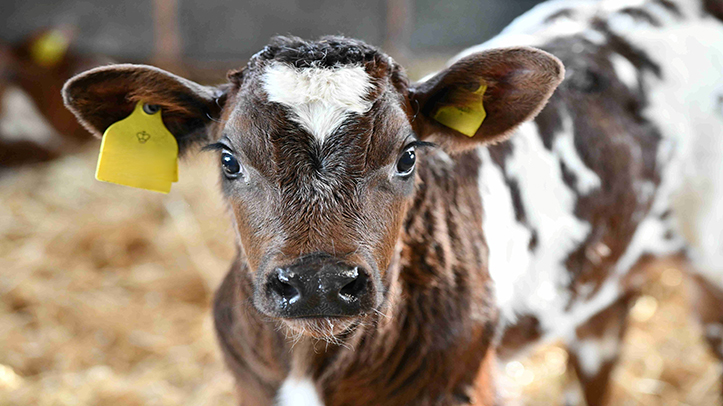
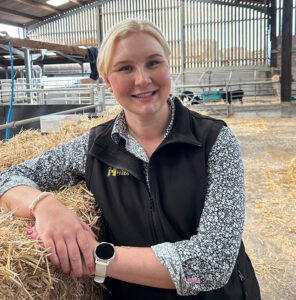
Lilly Cochrane, feed and youngstock specialist at Massey Harpers Feeds, says that good calf management is not about one single intervention, but about getting the basics right consistently, from nutrition and hygiene, to ventilation, testing and observation.
Good health is a key priority for all calf units but especially for block calving herds, when battling changes in weather conditions and humidity in a shed of a higher stocking density creating the ideal environment for bacteria and disease.
I recommend attention on five key controllable factors, increasing the chances a successful block calving.”
Milk volume
Ensuring calves receive enough energy from the outset is particularly important. A calf’s vulnerable period is from 7-14 days as they change over from their passive to active immunity.
High-volume milk feeding is a priority to give the calf the best possible start. The principle is straightforward: more energy available to the calf means more resources to support growth and health. An extra litre of milk replacer might cost around 39p, but that extra 39p is always cheaper than a treatment of medicine.
Test before treating
Scours can quickly become a headache for calf rearers, but guessing what is causing the problem can lead to wasted time, unnecessary treatment and delayed recovery. I recommend keeping a calf scour test kit readily available so farmers can establish what they are dealing with before deciding on treatment.
It can become very demoralising as a calf rearer to have sick calves. Rather than repeatedly treating a calf without knowing the underlying cause, testing helps farmers make a more informed decision. Treating correctly, will save money and the calf is likely to return to normal health much quicker.
Ventilation
Calf coats can be a contentious subject; ventilation and avoiding overheating should not be overlooked. I am not a fan of routinely using calf jackets, particularly where they are left on continuously. In an ideal world, if you were putting calf jackets on, you want to put them on at night and take them off in the morning, but that is an unrealistic commitment.
Instead, farmers should be paying close attention to the calf’s environment and ensuring there is an opportunity for excess heat to escape.
Clipping the calf’s back, at two to three weeks plus of age, can help with this, particularly where ventilation is an issue. Bear in mind; if they are sweating, then that is daily liveweight gain that you are missing out on.
Ruthless hygiene
Autumn conditions can be particularly challenging, with humidity and wet weather creating an environment where respiratory disease can thrive. The answer is not simply to clean thoroughly at the end of the calving period and then ease off. Milk residue, dirty feeding equipment and contaminated bedding can also contribute to the buildup of infection pressure.
Be absolutely ruthless with cleaning and disinfecting. If a pen has housed several calves, it might need to be completely emptied and cleaned rather than simply topped up with fresh bedding. Sand can also be a useful bedding option for cow’s calving pens, from a hygiene perspective.
Watch the calf
One of the most important tools available to calf rearers costs nothing – observation. Subtle changes in behaviour can be among the earliest signs that a calf is becoming unwell.
Rather than waiting until a calf is visibly sick, act when the behaviour starts to change. Look closely at feeding behaviour, activity and interaction with other calves to identify problems early.
Taking a temperature promptly and acting quickly can save a calf from becoming sick in the first place. In the long run, it will save you money, reduce your medicine usage and create a better environment for both the farmers and the calves.