Sheep farmers are being encouraged to extend worm monitoring to ewes, due to Haemonchus contortus, or Barber’s pole worm, becoming more prevalent across the UK.
However, it’s important to confirm a high egg count is due to Haemonchus before treating adult sheep, to ensure the correct treatment approach is taken, said Elanco’s ruminant technical consultant Matt Colston.
“At a recent farmer meeting, one farm had reported faecal egg counts into the thousands but only 10% was Haemonchus. Using a narrow spectrum wormer in this case wouldn’t have been the best option as it would have left a significant burden of other strongyles behind,” he explained.
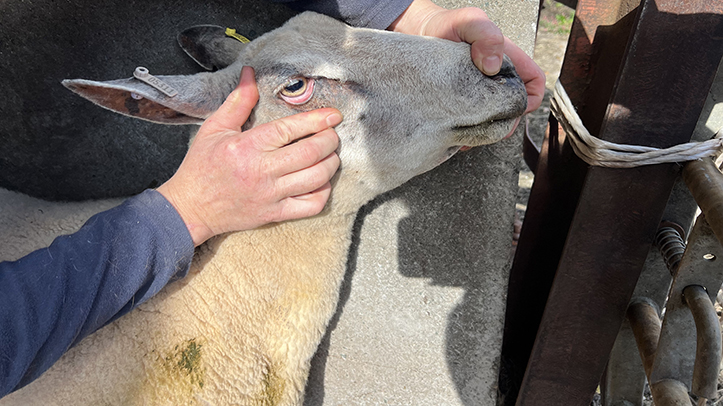
If you suspect Haemonchus, speak to your vet for advice on appropriate diagnostic testing, such as sending samples to the lab, FAMACHA testing (examining the colour of the mucous membranes of the lower eyelid to estimate the level of anaemia), or post-mortems.
“Knowing Haemonchus is present means you can put in some checks for adult ewes, such as some mob worm egg counts at routine handlings, and intervene, if required, before any serious problems occur,” Mr Colston said.
When considering whether to treat ewes with a wormer, much depends on the situation.
“If you get high egg counts from a mob sample, just one or two animals in the pool could be responsible for driving that number up,” he added.
“A discussion with your vet or adviser will help you decide if group treatment or just treating some individuals in the group is the best course of action.”
Product choice will also vary between individual farms, so again, it’s important to discuss appropriate treatment with your vet or SQP, Mr Colston said.
While a broad-spectrum anthelmintic such as Zolvix (monepantel) may be the right choice for some situations, other actives or groups might be more appropriate in other circumstances.
“For lambs the picture is simpler as they have not yet developed the level of immunity to gastrointestinal worms seen in most adult sheep,” said Mr Colston.
“As a result, farms are more likely to be carrying out routine FECs and therefore treating lambs before any signs of disease are visible.”
Farmers do not need to panic, but you should be prepared, carry out more routine FECs and work with advisers on a worm monitoring plan for your ewes, he concluded.