

OvertheCounter
    Twitter LinkedIn
    • Email Newsletters
    • Magazine Subscriptions
    • About Us
    • Advertise
    • Contact Us
    Twitter LinkedIn
    CPD Log-In
    OvertheCounter
    • News
      • Dairy / Beef
      • Sheep
      • Pigs / Poultry
      • Equine
      • Companion
      • Retail
      • Training
    • Magazines
      1. May 2026
      2. March 2026
      3. January 2026
      4. November 2025
      5. September 2025
      6. July 2025
      7. May 2025
      Featured

      Over the Counter – May 2026

      By Simon KingMay 18, 2026
      Recent

      Over the Counter – May 2026

      May 18, 2026

      Over the Counter – March 2026

      March 17, 2026

      Over the Counter – January 2026

      January 12, 2026
    • CPD Training
      • AMTRA CPD Modules
        • Frontline Academy
        • Companion Animal CPD Modules
        • Equine CPD modules
        • Livestock CPD Modules
        • Poultry CPD Modules
        • Are you a Gold Standard SQP?
      • VETPOL CPD Modules
        • Companion Animal CPD Modules
        • Equine CPD Modules
        • Livestock CPD Modules
        • Poultry CPD Modules
      • Earning CPD points with overthecounter.news
      • CPD Log-In
      • Wormstock 2023
    • National SQP Awards
    OvertheCounter
    News

    Post-weaning management key to boosting next season’s lamb output

    mmBy Simon KingJuly 1, 2026No Comments3 Mins Read
    LinkedIn Twitter Facebook Email

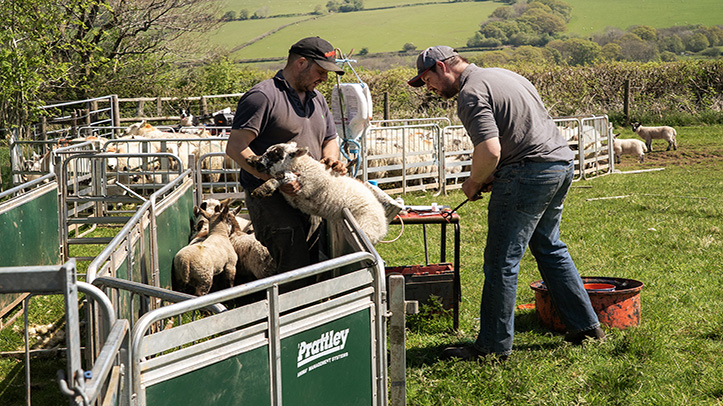
    Weaning should be viewed as the starting point for next season’s lamb crop, with poor ewe condition and hidden trace element deficiencies potentially costing flocks valuable lambs at scanning time, according to sheep experts.

    Nia Williams, commercial and technical manager at Nettex, said the post-weaning period is a critical window for assessing ewes and making nutritional adjustments ahead of tupping.

    “Weaning is the ideal time to assess ewes and ensure both ewes and rams are in the right body condition and have the correct trace element status ahead of breeding,” she said.

    “At mating, lowland ewes should be at a body condition score (BCS) of 3.0-3.5, and hill ewes 2.5-3.0. Ewes within this target at weaning should be maintained, while thinner ewes need early intervention to allow gradual recovery.”

    Even small losses in condition can have a measurable impact on fertility, with a one-unit drop in BCS reducing ovulation rate by around 0.45. In a 500-ewe flock scanning at 200%, this would equate to 45 fewer lambs on the ground if 10% of ewes were under target by 1 BCS.

    “Lean ewes are often the highest performers that had multiple lambs and milked heavily, so they need targeted support after weaning to recover before tupping,” said Ms Williams.

    One BCS unit represents around 10–12% of mature bodyweight, meaning a 70kg ewe may need to gain 7–8kg to move up a condition score. This should be achieved over 8–10 weeks to avoid negative effects on fertility.

    Where grazing is limited, supplementary feeding may be required, including silage, hay, concentrates or high-energy feed blocks. Splitting ewes into condition groups can also improve feeding efficiency.

    Trace element status is also critical, with deficiencies in selenium, cobalt and iodine known to affect ovulation, conception and lamb viability.

    “Mineral status is often a hidden limiting factor in fertility and must not be overlooked when preparing for tupping,” said Ms Williams.

    She recommends blood testing 8–10 ewes per management group post-weaning to identify any deficiencies early enough to correct them before breeding.

    “If energy, protein and mineral status are optimal and ewes still fail to regain condition, underlying issues such as parasites, lameness or poor teeth should be investigated,” she adds.

    Trace element supplementation options include drenches such as Nettex’s Sheep Conditioning or Cobalt, Selenium and B12 drench, or boluses like EnduraBol Sheep, with the best choice depending on system and grazing type.

    “Good breeding performance depends on multiple factors working together,” added Ms Williams. “Body condition, flock health, trace elements and grazing management all play a role. Using the post-weaning period well gives ewes the best chance of delivering a productive lamb crop the following season.”

    Share. LinkedIn Facebook Twitter Email
    Previous ArticleGuinea Pig Welfare Forum returns for third year
    mm
    Simon King

    Editor - Over The Counter. Simon has more than 20 years’ experience in B2B publishing. When not slumped over his PC, Simon is a keen follower of sport, supporting Manchester United, and is at his absolute happiest watching most sport in glorious UHD, with something cold to drink by his side.

    Read Similar Stories

    Guinea Pig Welfare Forum returns for third year

    Celebrities flock to support anti-cage campaign

    Encore launches Bone Broth toppers for cats

    Most Read

    Post-weaning management key to boosting next season’s lamb output

    July 1, 2026

    Guinea Pig Welfare Forum returns for third year

    June 30, 2026

    Celebrities flock to support anti-cage campaign

    June 30, 2026

    Any animal medicine advertising or promotion should conform to the ‘code of practice’ of the National Office of Animal Health (NOAH).
    For full details contact the publisher or www.noah.co.uk.

    Lewis Business Media Ltd endeavours to make articles and statements as accurate as possible.

    © 2026 Lewis Business Media. All Rights Reserved.
    Lewis Business Media, Suite A, Arun House, Office Village, River Way, Uckfield, TN22 1SL

    Privacy Policy | Cookie Policy | Terms & Conditions

    The OTC "tick" mechanism is the copyright of Lewis Business Media Ltd ©2025

    • Pet Business World
    • Pest

    Type above and press Enter to search. Press Esc to cancel.

    OvertheCounter
    Managing Your Privacy

    To provide the best digital experience, we use cookies to store and/or access device information. Consenting to our use of cookies allows us to process data such as reading behaviour. Not consenting or withdrawing consent, may adversely affect certain features and functions.

    Functional Always active
    The technical storage or access is strictly necessary for the legitimate purpose of enabling the use of a specific service explicitly requested by the subscriber or user, or for the sole purpose of carrying out the transmission of a communication over an electronic communications network.
    Preferences
    The technical storage or access is necessary for the legitimate purpose of storing preferences that are not requested by the subscriber or user.
    Statistics
    The technical storage or access that is used exclusively for statistical purposes. The technical storage or access that is used exclusively for anonymous statistical purposes. Without a subpoena, voluntary compliance on the part of your Internet Service Provider, or additional records from a third party, information stored or retrieved for this purpose alone cannot usually be used to identify you.
    Marketing
    The technical storage or access is required to create user profiles to send advertising, or to track the user on a website or across several websites for similar marketing purposes.
    • Manage options
    • Manage services
    • Manage {vendor_count} vendors
    • Read more about these purposes
    Cookie Preferences
    • {title}
    • {title}
    • {title}