

Mole Valley Farmers has returned an operating profit in the 2024/25 financial year, marking a key milestone in the farmer-owned cooperative’s ongoing transformation.
After two years of material losses, the group delivered a statutory operating profit of £500,000, an improvement of £5.8 million on the previous year, reflecting the strategic actions taken over the past two years.
Jack Cordery,, chief executive of Mole Valley Farmers, described the progress as “a deeply encouraging step forward,” emphasising the business remains on a journey toward long‑term sustainable profitability.
He said: “The decisive measures already taken have strengthened resilience and improved overall performance.
“Our teams have worked tirelessly to streamline operations without compromising quality or service. This strengthened financial foundation puts us in a far better position as we look ahead.”
A major driver of the improved performance has been a sharpened focus on cost control, productivity and operational efficiency.
Following a period of high inflation, rising staff costs and volatile commodity markets, the business undertook a full review of expenditure and internal processes.
Mr Cordery said the company also accelerated its adoption of digital technologies across manufacturing, retail and logistics. AI tools are now automating routine administrative tasks, enabling staff to concentrate on higher‑value work.
Enhancements to customer ordering platforms, logistics systems and stock management have already delivered notable improvements in efficiency and customer experience.
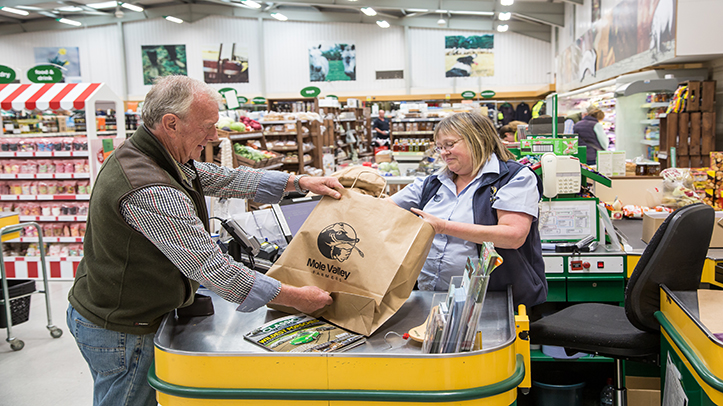
Despite pressures on traditional retail, Mole Valley Farmers’ stores continued to trade well despite rising costs and changing consumer behaviour, with agricultural products at the heart of its product range.
Investment in feed raw material security continued, including a long-term agreement with Cattedown Wharves in Plymouth and ongoing work with Appledore docks, providing greater warehousing and storage capacity.
Mr Cordery said: “By importing raw materials directly from manufacturers, we have reduced reliance on intermediaries, improved pricing stability and increased our ability to manage supply fluctuations.
“The availability of quayside storage has also enabled us to buffer supply at critical points in the year, reducing risk during peak demand periods or global uncertainty.”
The dedicated organic mill at Uffculme continues to outperform expectations, with significant investment planned this year for the Huntworth and Dorchester mills.
Chairman Stephen Bone said: “Significant investment is planned this financial year for our mills which underlines our determination to improve the productivity and output while maintaining quality and competitiveness.”
Looking ahead, Mr Cordery said the business enters 2025/26 in a far stronger position despite ongoing cost pressures including National Insurance increases, National Living Wage adjustments, persistent inflation and now the conflict in the Middle East.
He concluded: “Our operational model is designed to deliver value to our Farmer Shareholders, members and customers through competitive pricing, reliable supply chains and long‑term investment in the sectors we serve.
“We are proud of the progress made this year. There is more to do but the foundations we have put in place give us every confidence for the future.”