

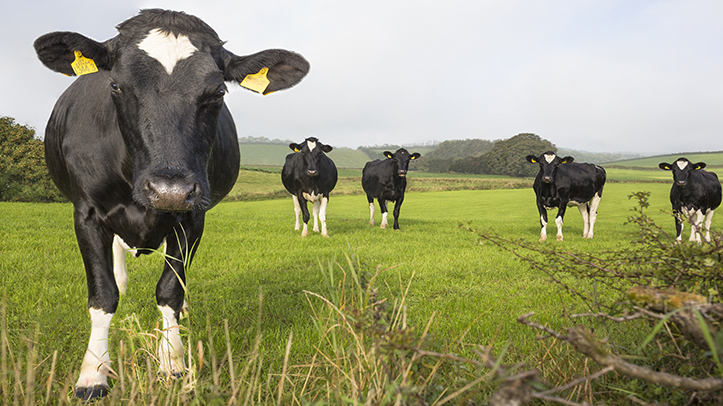
SQPs are being encouraged to talk to farmers about the benefits of adopting season-long worm and fly protection strategies in their dairy and beef herds.
The move will help prevent significant production and economic losses during the grazing season, while easing the animal stress and labour costs of gathering and handling them several times.
Studies have shown worms can cause up to a 30% reduction in growth rate in youngstock and there is a significant difference in the impact of moderate vs high worm challenges during the grazing season. Moreover, fly worry can affect cattle of all ages, causing growth rate losses of up to 0.3kg per day and 0.5 litres per cow per day milk loss in dairy cows.
Patricia van Veen, veterinary surgeon and national veterinary manager at Zoetis, said: “First and second season grazing youngstock are at particular risk as they are naive and therefore vulnerable to worms due to pasture worm burdens from overwintering larvae or eggs passed by previously infected animals.
“Spring and early summer offer ideal conditions for worm larvae to develop and pasture burdens to build to levels that may cause disease and production losses in grazing livestock.”
Ms van Veen continued: “Flies can lead to problems in cattle of all ages, like fly worry and diseases such as pink eye and summer mastitis, which have the potential to spread among batches and seriously impact animal health, welfare and future productivity.
“Early intervention from the start of the grazing season will help manage flies before their numbers escalate as they can rapidly multiply.”
Andrew Venables from Hills Green Farm near Macclesfield, Cheshire has previously found gut and lungworm a challenge in his dairy herd.
“In the past, when we used drenches and pour-ons, we would have to treat every three to four weeks,” recalled Mr Venables.
“Youngstock are now injected with the long-acting injectable wormer CYDECTIN 10% LA Solution around turnoutwhich helps avoid the additional stress of gathering and handling them multiple times at grass and enables us to hit our growth targets.
“The strategy is much less labour-intensive and reduces animal stress, which works for this group of animals, grazing away on the farm.”
CYDECTIN 10% LA Solution is a single-shot injection containing moxidectin to treat and control gastrointestinal roundworms and lungworm in cattle. It allows animals to develop a natural immunity when exposed to larvae passing through the gut wall, initiating an immune response before being killed by the wormer.
“Faecal egg counts are also taken to monitor roundworm levels, and future field burdens. Although faecal samples are less useful to diagnose lungworm in acute disease, it is still important to know it is present on the farm,” added Mr Venables.
“Since using the injection we have had more consistent growth rates during the grazing season, whereas we had a lot of ups and downs with the previous worm control strategy. The youngstock have been ready to serve earlier, reaching our target of 350kg liveweight easily by 15 months.”
Mr Venables also trialled FLECTRON ear tags in a block of first season grazing heifers and second grazing season bulling heifers during the 2025 grazing season, having previously had one or two cases of pink eye, mastitis and blind quarters each year due to flies.
“We noticed very little fly activity and related behaviour like fly-worry, in the two groups that were tagged with FLECTRON, throughout the season; there were a lot more flies and fly worry in the batches that were treated with a spot-on treatment, as there were clearly some gaps in coverage,” said Mr Venables.
“We saw no cases of pink eye or summer mastitis in those fly-tagged animals and no blind quarters after calving and milking, which was an excellent season outcome!”
He added: “One tag per heifer, applied early, carried us right through to the end of the grazing season and once they were in, they were in! While the cost of the tags is similar to spot-ons, we saved on handling, animal stress and mid-season interventions, and tag retention was excellent.”
FLECTRON tags offer five months protection against nuisance and biting flies and have a zero-day meat and milk withdrawal. They work by slowly releasing the active ingredient, cypermethrin, onto the tag’s surface which acts as a constant reservoir throughout the season.