

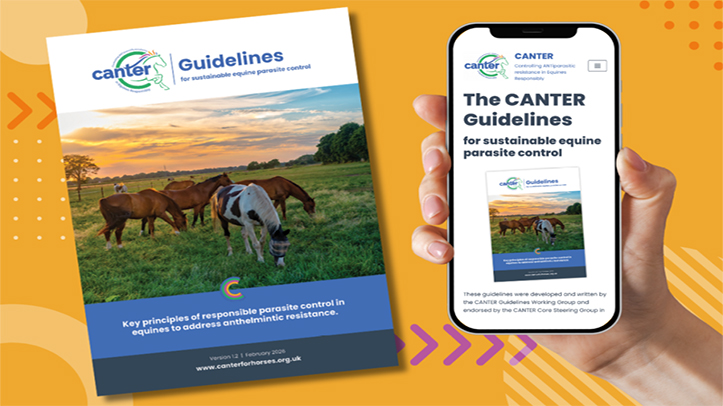
The CANTER Guidelines for Sustainable Equine Parasite Control, first published in 2024, by the pan industry group, Controlling Parasitic Resistance in Equines Responsibly (CANTER) have been extensively revised and updated, with the second edition now released (February 2026) on the CANTER website.
Written by leading experts and endorsed by the CANTER Core Steering Group, they are designed to address the growing and increasingly urgent challenge of anthelmintic resistance in horses.
Over the autumn and winter of 2025/2026, the CANTER Guidelines Working Group undertook a substantial review of the document.
Most chapters have been updated to improve readability, flow and consistency of style, with clearer links between related chapters to support practical use. The intention is for the Guidelines to offer clear, relevant and easy to access information on equine parasite control for UK prescribers.
Julia Shrubb, chair of CANTER, said: “A huge amount of work has gone into this revision. I would like to thank every member of the Guidelines Working Group for the generosity of their time, expertise and commitment.
“Their collective knowledge has ensured this remains the most thorough, up to date and practical resource of its kind in the equine sector for UK prescribers.
“Anthelmintic resistance is one of the most significant challenges facing equine health today, and I would urge everyone involved in prescribing and advising on parasite control to make full use of this resource.”
The CANTER Guidelines set out the key principles of sustainable equine parasite control, encouraging a strategic, risk-based approach rather than routine treatment or an ad hoc approach to parasite control.
Research shows that indiscriminate use of wormers remains widespread and continues to accelerate resistance, increasing the risk to equine health and welfare across the UK.
- Assess parasite transmission risk using a structured, risk-based approach;
- Use monitoring tools such as worm egg counts (FECs) and antibody testing to inform treatment decisions;
- Apply pasture and horse management strategies to reduce reliance on anthelmintics; and
- Prescribe wormers appropriately and responsibly, based on current resistance profiles.
Importantly, the CANTER Guidelines are a live document – they will continue to be reviewed and updated annually to ensure they reflect the very latest evidence and remain a trusted reference for the industry.
Two new chapters are already in development, focusing on parasite control in youngstock and on quarantine management, both of which are expected to launch later this quarter.
To read the revised Guidelines, click here.