

Cattle farmers are being urged to consider lungworm vaccination before turnout as both cases and signs of resistance to commonly used wormers continue to rise.
Research from the University of Glasgow has added to growing evidence of resistance to macrocyclic lactones (MLs) such as ivermectin and moxidectin, with studies showing these treatments failing to control lungworm infections in cattle.
Against this backdrop, Dr Kat Baxter-Smith, veterinary adviser with MSD Animal Health, said the message on pre-turnout vaccination has never been more important.
“There’s been a tenfold increase in lungworm infections since the mid-1990s – particularly in Scotland and northern England,” she said.
“Between the 2018 and 2024, cases of parasitic pneumonia diagnosed and reported to the GB Veterinary Investigation Diagnosis Network (VIDA) rose by 100% across the UK.”
Dr Baxter-Smith explained that anecdotal on-farm reports and government data also suggest lungworm is now being seen in many adult cattle4, not just in first- or second-season grazers as traditionally thought.
“Clinical disease in adult cattle can occur late in the season due to a lack of immunity from natural challenge, immunosuppression from other disease, or very high worm burdens,” she said.
“This reinforces the need for protection through vaccination.”
Lungworm infestation occurs when cattle graze pasture contaminated with larvae from the worm Dictyocaulus viviparus. Once ingested, the larvae migrate to the lungs where they mature, reproduce, and release eggs that are coughed up, swallowed, and excreted back onto pasture – rapidly recontaminating the grazing environment.
Dr Baxter-Smith said vaccination remains the gold standard for sustainable lungworm control, as it enables animals to build immunity before they face infection pressure on pasture.
“Routine use of wormers can encourage resistance as highlighted by recent studies and reduce the animal’s ability to develop natural immunity,” she explained. “Vaccination, however, stimulates immunity through controlled exposure to irradiated larvae, offering long-lasting protection without driving resistance.”
Dr Baxter-Smith added that although many farmers continue to vaccinate, long-acting wormers and pour-ons have become more popular.
“Now, with evidence of resistance emerging, we need to prioritise sustainable practices like vaccination,” she said.
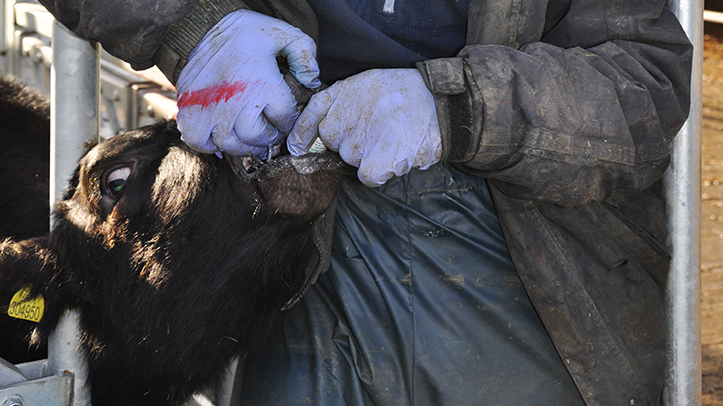
On farms where lungworm is a risk, two doses of Bovilis Huskvac should be given four weeks apart before turnout. Calves must be over eight weeks of age and older at the first vaccination. This helps protect them by building immunity before they are exposed to lungworm on pasture.
The economics of vaccination also make sense, added Dr Baxter-Smith.
“Outbreaks can cost £50–£100 per affected animal, and up to £3 per head per day in lost milk yield in dairy cows, which is far more costly than vaccinating,” she said.
Dr Baxter-Smith recommended that farmers discuss their individual risk and grazing management with their vet as part of a wider herd health plan.
“Every farm is different. Talk to your vet about your grazing system, the age of animals at risk, and the worming policy you use,” she said.
“A vaccination plan tailored to your farm can help safeguard herd health, reduce financial losses, and protect the efficacy of the wormers we still have.”