

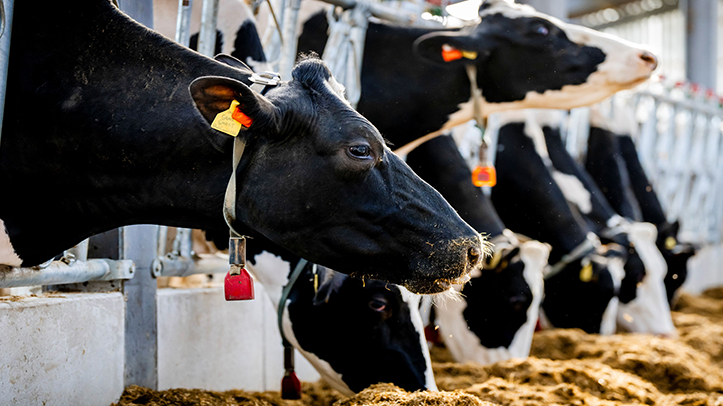
With most dairy herds now inside for the winter, having taken advantage of grazing opportunities, attention will now focus on getting best returns from winter TMR feeding, particularly with one eye on dropping milk prices.
While margins may become tighter, a cow’s nutritional requirements do not change in accordance with milk price, and short-term thinking now can have serious long-term performance implications.
“With margins tight, it is all too easy to consider stripping out grams per head per day of feed additives to make savings, particularly when considering cows can be eating 50-60kg of fresh weight of feed per day. Reducing a few grams doesn’t feel a massive loss, but can have a huge impact down the line,” warned Anna Dinsdale, Trident MicroNutri’s ruminant technical manager.
“Initially, you may not see a drastic change in your animals, but there is potential to see impacts in the longer term.”
Ms Dinsdale continued: “If you take out the low inclusion products that are supporting ruminal health, and function, supporting the liver, or detoxifying ”invisible” toxins that the cow has ingested, eventually the wheels could fall off the wagon.
“It might start with a few early warning signs, such as butterfat drops, crucial to current contracts, but could have longer-term implications, such as reductions in fertility. Supporting the herd by focusing on rumen health and feed efficiency can help to avoid additional pressures that ultimately may affect your herd’s profitability.
Ms Dinsdale said now is the time to work with your feed advisor to look at diets and make informed decisions on what combinations of feed additives will bring the best return to optimise specific milk contracts, with a focus on feed and rumen efficiency, rather than production alone.
“Take the time to think of the additives you need, and how they can help maintain rumen function and fibre digestion, or support immune function, for example, which could otherwise divert energy away from milk production,” she said.
“Additives to buffer and condition the rumen environment, such as AcidBuf and Vistacell, can help maintain a higher rumen pH, reducing SARA risk, for example, while the mycotoxin remediator Ultrasorb R helps prevent inflammatory responses, caused by mycotoxin and endotoxin uptake across the gut wall and into the cow’s blood. This is another energy expensive process, reducing available energy for milk production.
“The reality is, we are really looking at pence per head per day inputs, that are bringing major long-term benefits to your herd. There is a lot to lose, with very little to gain, by stripping additive inclusions in response to a challenging milk price,” she concludes.