

OvertheCounter
    Twitter LinkedIn
    • Email Newsletters
    • Magazine Subscriptions
    • About Us
    • Advertise
    • Contact Us
    Twitter LinkedIn
    CPD Log-In
    OvertheCounter
    • News
      • Dairy / Beef
      • Sheep
      • Pigs / Poultry
      • Equine
      • Companion
      • Retail
      • Training
    • Magazines
      1. May 2026
      2. March 2026
      3. January 2026
      4. November 2025
      5. September 2025
      6. July 2025
      7. May 2025
      Featured

      Over the Counter – May 2026

      By Simon KingMay 18, 2026
      Recent

      Over the Counter – May 2026

      May 18, 2026

      Over the Counter – March 2026

      March 17, 2026

      Over the Counter – January 2026

      January 12, 2026
    • CPD Training
      • AMTRA CPD Modules
        • Frontline Academy
        • Companion Animal CPD Modules
        • Equine CPD modules
        • Livestock CPD Modules
        • Poultry CPD Modules
        • Are you a Gold Standard SQP?
      • VETPOL CPD Modules
        • Companion Animal CPD Modules
        • Equine CPD Modules
        • Livestock CPD Modules
        • Poultry CPD Modules
      • Earning CPD points with overthecounter.news
      • CPD Log-In
      • Wormstock 2023
    • National SQP Awards
    OvertheCounter
    Dairy / Beef

    Changes to cleaning practices could improve the health of calves on dairy farms

    mmBy Simon KingFebruary 23, 2021No Comments3 Mins Read
    LinkedIn Twitter Facebook Email

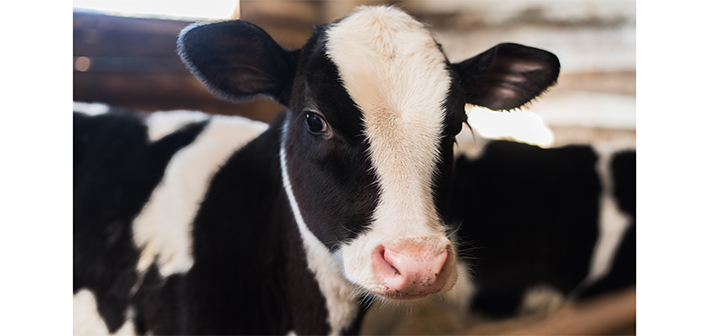
    A new study looking at colostrum hygiene on British dairy farms has shown that by making a few simple changes to cleaning protocols, farmers could significantly minimise the risk of disease in calves.

    The study, published in Frontiers in Veterinary Medicine and led by experts from the School of Veterinary Medicine and Sciences at the University of Nottingham, is one of the first to look at colostrum hygiene in Great Britain.

    Calves are born with zero immunity and rely entirely on colostrum to gain immunity against disease. It is essential that calves receive an adequate quantity of good quality colostrum as soon as possible after birth. High bacteria levels in colostrum can both increase the chances of calf scour and reduce the levels of immunity absorbed.

    Several studies have provided estimates of colostrum hygiene at a national level, although to date this has not been conducted in Great Britain. In this new study, experts analysed data from 328 colostrum samples from 56 British dairy farms.

    Samples collected from collection and feeding equipment had higher levels of bacteria than those collected directly from the cows’ teat, suggesting that whilst colostrum from the cow is relatively low in bacterial levels, improperly cleaned equipment can be a major source of bacterial contamination. Over one third of samples collected from collection or feeding equipment were over the threshold for high bacterial levels and represent a significant risk to the health of calves.

    Dr Robert Hyde, one of the researchers on the study, said: “By analysing colostrum collection protocols on the farms, we were able to identify a small number of management practices likely to have a substantial impact on colostrum hygiene for the majority of farms.

    “For example, the use of scalding hot water to clean collection and feeding equipment could reduce bacteria levels by over 90% compared with using cold water only. Less than half of farms used scalding hot water to clean colostrum collection and feeding equipment, suggesting there are a large number of farms that could make this simple change.”

    Key recommendations based on the research to reduce bacterial levels in colostrum suggest protocols should include the cleaning of colostrum collection and feeding equipment after every use with hot water as opposed to cold water, and hypochlorite or peracetic acid as opposed to water or parlour wash.

    Cows’ teats should be prepared with a pre-milking teat disinfectant and wiped with a clean, dry paper towel prior to colostrum collection, and colostrum should be pasteurised where possible, the research recommended.

    Share. LinkedIn Facebook Twitter Email
    Previous ArticleIncreasing milk from forage through precision feeding
    Next Article Su-Bridge Pet Supplies to host first virtual trade show
    mm
    Simon King

    Editor - Over The Counter. Simon has more than 20 years’ experience in B2B publishing. When not slumped over his PC, Simon is a keen follower of sport, supporting Manchester United, and is at his absolute happiest watching most sport in glorious UHD, with something cold to drink by his side.

    Read Similar Stories

    Farms hold key to break rodenticide resistance spread

    New calculator helps optimise pig and broiler feed strategies

    New environmental index launched to cut UK sheep flock carbon footprint

    Most Read

    Farms hold key to break rodenticide resistance spread

    June 3, 2026

    New calculator helps optimise pig and broiler feed strategies

    June 2, 2026

    New environmental index launched to cut UK sheep flock carbon footprint

    June 1, 2026

    Any animal medicine advertising or promotion should conform to the ‘code of practice’ of the National Office of Animal Health (NOAH).
    For full details contact the publisher or www.noah.co.uk.

    Lewis Business Media Ltd endeavours to make articles and statements as accurate as possible.

    © 2026 Lewis Business Media. All Rights Reserved.
    Lewis Business Media, Suite A, Arun House, Office Village, River Way, Uckfield, TN22 1SL

    Privacy Policy | Cookie Policy | Terms & Conditions

    The OTC "tick" mechanism is the copyright of Lewis Business Media Ltd ©2025

    • Pet Business World
    • Pest

    Type above and press Enter to search. Press Esc to cancel.

    OvertheCounter
    Managing Your Privacy

    To provide the best digital experience, we use cookies to store and/or access device information. Consenting to our use of cookies allows us to process data such as reading behaviour. Not consenting or withdrawing consent, may adversely affect certain features and functions.

    Functional Always active
    The technical storage or access is strictly necessary for the legitimate purpose of enabling the use of a specific service explicitly requested by the subscriber or user, or for the sole purpose of carrying out the transmission of a communication over an electronic communications network.
    Preferences
    The technical storage or access is necessary for the legitimate purpose of storing preferences that are not requested by the subscriber or user.
    Statistics
    The technical storage or access that is used exclusively for statistical purposes. The technical storage or access that is used exclusively for anonymous statistical purposes. Without a subpoena, voluntary compliance on the part of your Internet Service Provider, or additional records from a third party, information stored or retrieved for this purpose alone cannot usually be used to identify you.
    Marketing
    The technical storage or access is required to create user profiles to send advertising, or to track the user on a website or across several websites for similar marketing purposes.
    • Manage options
    • Manage services
    • Manage {vendor_count} vendors
    • Read more about these purposes
    Cookie Preferences
    • {title}
    • {title}
    • {title}