

OvertheCounter
    Twitter LinkedIn
    • Email Newsletters
    • Magazine Subscriptions
    • About Us
    • Advertise
    • Contact Us
    Twitter LinkedIn
    CPD Log-In
    OvertheCounter
    • News
      • Dairy / Beef
      • Sheep
      • Pigs / Poultry
      • Equine
      • Companion
      • Retail
      • Training
    • Magazines
      1. May 2026
      2. March 2026
      3. January 2026
      4. November 2025
      5. September 2025
      6. July 2025
      7. May 2025
      Featured

      Over the Counter – May 2026

      By Simon KingMay 18, 2026
      Recent

      Over the Counter – May 2026

      May 18, 2026

      Over the Counter – March 2026

      March 17, 2026

      Over the Counter – January 2026

      January 12, 2026
    • CPD Training
      • AMTRA CPD Modules
        • Frontline Academy
        • Companion Animal CPD Modules
        • Equine CPD modules
        • Livestock CPD Modules
        • Poultry CPD Modules
        • Are you a Gold Standard SQP?
      • VETPOL CPD Modules
        • Companion Animal CPD Modules
        • Equine CPD Modules
        • Livestock CPD Modules
        • Poultry CPD Modules
      • Earning CPD points with overthecounter.news
      • CPD Log-In
      • Wormstock 2023
    • National SQP Awards
    OvertheCounter
    News

    SCOPS urges farmers to consider reducing number of ewes wormed at lambing time

    mmBy Simon KingFebruary 18, 2021No Comments4 Mins Read
    LinkedIn Twitter Facebook Email

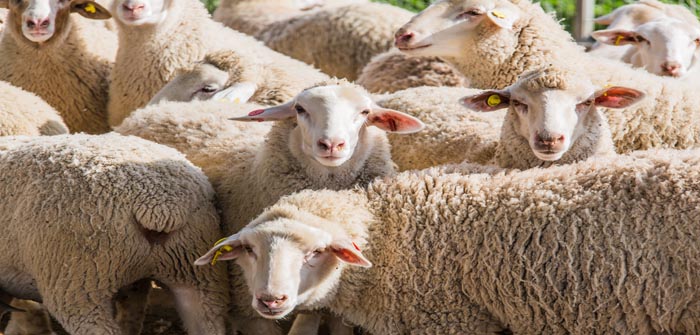
    Worming ewes around lambing remains a common practice in UK flocks, but with most sheep farmers now aware that over-use of wormers is a major factor in the development of anthelmintic resistance, SCOPS is urging producers to think about whether they can safely reduce the number of ewes treated.

    SCOPS said farmers who reduce numbers treated will protect the future of wormers on their farm, while reaping the benefit of saving money and time.

    Why do we treat ewes?
    It may be a surprise to many people, but worming ewes around lambing is not normally for the benefit of the ewe. Fit, mature ewes are able to keep worms under control using their immune system. However, if they are under nutritional strain around lambing, their immune system weakens allowing worms in the ewe’s gut to produce a lot more eggs. This is known as the peri-parturient rise (PPR) and these eggs, if deposited on pasture, will develop into larvae and add to the challenge to lambs later in the season.

    Lesley Stubbings of SCOPS said: “The rationale behind treating a ewe is that it removes the worms in her gut and hence the number of worm eggs contaminating the pasture. The problem is that this can be very selective for resistance.

    “The good news is we know not all ewes exhibit the PPR so, if we can identify these and only treat the ones likely to put out the most eggs, we can reach a practical solution.”

    Which ewes should we treat?
    Historically, we were told the higher the litter size the more likely the ewe was to have a high PPR. However, more recent evidence shows it is body condition (BCS) and degree of nutritional strain the ewe is under that is most likely to determine the PPR. This means well fed ewes carrying twins, or even triplets that are holding their condition, do not need to be treated. Lean ewes carrying singles should be.

    Ms Stubbings added: “We can use BCS rather than litter size to determine the need to treat. Flocks that have adopted this approach have significantly reduced the number of ewes they treat around lambing.”

    What proportion of ewes should I leave untreated?
    “To reduce the risk of selecting heavily for resistance it has generally been recommended to leave 10-20% of ewes in each grazing mob untreated. However, with mounting evidence that fit, well fed ewes do not need a treatment, we can now view this figure as a minimum,” Ms Stubbings said.

    Independent UK research published in 2018, carried out by APHA and funded by VMD, found there was no advantage in blanket worming ewes at lambing. There was no difference in faecal egg counts or growth rates of lambs reared on ewes that were wormed compared to those that were not treated at lambing.

    This is supported by farmers such as Gareth Owen, a producer in Leicestershire who monitors egg counts in his ewes.

    He said: “We have monitored ewe egg output in the run up to lambing for several years and proved to ourselves that the majority of our ewes do not shed many eggs. Consequently, only our shearlings and leaner ewes are treated at lambing, with no detriment to the ewes or any subsequent egg counts in their lambs.

    “We must be able to control worms in the long term and am not prepared to risk accelerating the development of resistance on the farm by administering indiscriminate ewe treatments simply because that’s what we always used to do. The fact it also saves us a lot of money and time at such a busy period is an extra bonus.”

    Share. LinkedIn Facebook Twitter Email
    Previous ArticlePFMA responds to Exeter University’s study into cat predation
    Next Article Call for sheep farmers to share their experiences of mastitis
    mm
    Simon King

    Editor - Over The Counter. Simon has more than 20 years’ experience in B2B publishing. When not slumped over his PC, Simon is a keen follower of sport, supporting Manchester United, and is at his absolute happiest watching most sport in glorious UHD, with something cold to drink by his side.

    Read Similar Stories

    Farms hold key to break rodenticide resistance spread

    New calculator helps optimise pig and broiler feed strategies

    New environmental index launched to cut UK sheep flock carbon footprint

    Most Read

    Farms hold key to break rodenticide resistance spread

    June 3, 2026

    New calculator helps optimise pig and broiler feed strategies

    June 2, 2026

    New environmental index launched to cut UK sheep flock carbon footprint

    June 1, 2026

    Any animal medicine advertising or promotion should conform to the ‘code of practice’ of the National Office of Animal Health (NOAH).
    For full details contact the publisher or www.noah.co.uk.

    Lewis Business Media Ltd endeavours to make articles and statements as accurate as possible.

    © 2026 Lewis Business Media. All Rights Reserved.
    Lewis Business Media, Suite A, Arun House, Office Village, River Way, Uckfield, TN22 1SL

    Privacy Policy | Cookie Policy | Terms & Conditions

    The OTC "tick" mechanism is the copyright of Lewis Business Media Ltd ©2025

    • Pet Business World
    • Pest

    Type above and press Enter to search. Press Esc to cancel.

    OvertheCounter
    Managing Your Privacy

    To provide the best digital experience, we use cookies to store and/or access device information. Consenting to our use of cookies allows us to process data such as reading behaviour. Not consenting or withdrawing consent, may adversely affect certain features and functions.

    Functional Always active
    The technical storage or access is strictly necessary for the legitimate purpose of enabling the use of a specific service explicitly requested by the subscriber or user, or for the sole purpose of carrying out the transmission of a communication over an electronic communications network.
    Preferences
    The technical storage or access is necessary for the legitimate purpose of storing preferences that are not requested by the subscriber or user.
    Statistics
    The technical storage or access that is used exclusively for statistical purposes. The technical storage or access that is used exclusively for anonymous statistical purposes. Without a subpoena, voluntary compliance on the part of your Internet Service Provider, or additional records from a third party, information stored or retrieved for this purpose alone cannot usually be used to identify you.
    Marketing
    The technical storage or access is required to create user profiles to send advertising, or to track the user on a website or across several websites for similar marketing purposes.
    • Manage options
    • Manage services
    • Manage {vendor_count} vendors
    • Read more about these purposes
    Cookie Preferences
    • {title}
    • {title}
    • {title}